How to control the cost of turning a corporate mascot into a plush toy
The most effective cost control happens before quotation: define size, quantity, fabric, workmanship, accessories and packaging, then simplify construction and plan styles together without losing the mascot’s recognizable identity.
Start with the eight variables that shape total cost.
Corporate gifts, brand merchandise, event giveaways, IP mascots and cross-border products should be assessed across size, construction complexity, fabric, decoration, accessories, quantity, packaging and destination market. Final pricing remains project-specific.
COST VARIABLES
Cost variables and control direction
Variable
Main impact
Control direction
Size
Materials, filling, packaging volume and freight
Match the size to the actual use
Construction
Pattern pieces, sewing and shaping
Keep the recognizable silhouette and reduce unnecessary parts
Fabric
Material use, price and sewing difficulty
Choose based on appearance, use and budget
Decoration
Colors, area, stitch count and process
Select production-suitable decoration
Accessories
Clothing, hats, tags and assembly
Keep identity-critical accessories
Quantity and styles
Material purchasing and setup allocation
Confirm total quantity and style breakdown early
Packaging
Boxes, cards, bags, inserts and freight volume
Separate display needs from transport protection
Market
Labels, testing and channel requirements
Confirm country, age group and channel before quotation
DESIGN TO PRODUCTION
1. Control cost at the design stage
Separate identity-critical features from adjustable details. Head-to-body proportion, primary colors, expression and signature clothing or accessories usually carry the mascot’s recognition. Lower-recognition decoration may be reduced, converted to embroidery or simplified. Provide front, side and back views with target size, colors, fabric direction and accessory requirements.
01
2. Match workmanship to the visual need
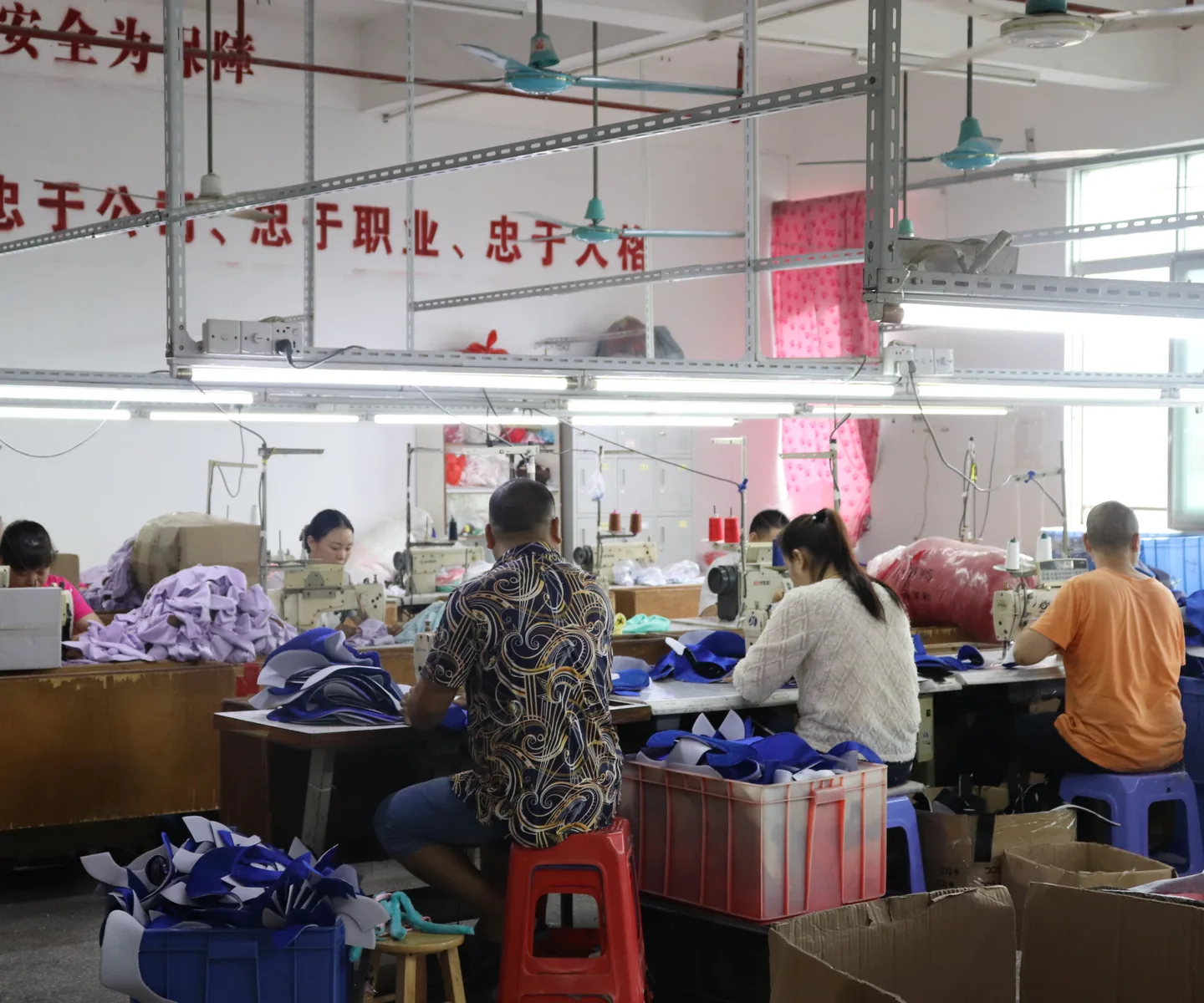
Small text or simple facial details may suit embroidery. Large flat graphics may be assessed through printing or appliqué. Three-dimensional marks may require separate parts and assembly. Yiliuba’s available production materials show sewing, computer embroidery, filling preparation, fabric storage and needle inspection scenes; the actual project flow remains product-specific.
02
3. Plan quantity and styles together
Yiliuba’s usual custom plush MOQ is 500–1,000 pieces, subject to assessment by size, materials, workmanship, number of styles, packaging and order conditions. For a limited budget, consider fewer styles, shared base construction, early style allocation and simpler packaging. Smaller quantities require a separate material, workmanship and budget assessment.
03
4. Use sampling to reduce later rework
During sampling, review size, proportion, color, fabric, filling, embroidery clarity, accessory attachment, packaging and production repeatability—not only visual similarity. The usual first sample timing is approximately 7 days after key requirements are clear and the project is ready for sampling. Sampling fees usually start from RMB 500, depending on the project.
PROJECT BRIEF
Buyer preparation checklist
01Front, side and back views
02Target finished size
03Total quantity and style breakdown
04Fabric, color and hand-feel requirements
05Embroidery, printing, appliqué or accessory requirements
06Packaging, labeling and destination market
07Expected timing and receiving location
08Confirmation of rights to use the mascot, logo or character
WORKFLOW
Recommended cost-control workflow
01
Define use, size, quantity, market and budget direction
02
Separate core identity features from adjustable details
03
Assess construction, materials, workmanship, accessories and packaging
04
Request an itemized estimate with assumptions and exclusions
05
Lock the artwork version and make a sample
06
Confirm final sample, materials, packaging, labels and inspection requirements
07
Confirm timing based on quantity, materials, inspection and transportation
FAQ
Corporate mascot plush FAQ
01What should we control first?
Usually size, construction complexity and accessory count because they affect several downstream cost items.
02Will simplifying the design weaken brand recognition?
Not necessarily. Protect the silhouette, colors, expression and signature accessories first.
03Can smaller quantities be assessed?
Yes, but they require a separate assessment of styles, materials, workmanship and budget. The usual MOQ is 500–1,000 pieces.
04How long does bulk production take after sample approval?
The usual reference is approximately 30 days after the sample, materials, workmanship and packaging are confirmed. Final timing is project-specific.
NEXT STEP
Send the design, size and quantity for a cost assessment.
Share the artwork, target size, expected quantity, destination market and timing so the construction, materials, workmanship and sampling conditions can be assessed.
Send the design, size and quantity for a cost assessment.
Share the artwork, target size, expected quantity, destination market and timing so the construction, materials, workmanship and sampling conditions can be assessed.